Biodiversity at the Nieuwe Instituut Zoöp
With its International Day for Biological Diversity on 22 May, the United Nations emphasises the importance of linking science, nature and culture in order to combat species loss. To mark the occasion, the Nieuwe Instituut Zoöp is presenting a variety of current and future activities related to biodiversity, alongside an innovative approach to thinking, working and designing that supports the survival of all living things. Will you join us?
19 May 2026
Zoöp Nieuwe Instituut
Nieuwe Instituut became the world’s first Zoöp in 2022. Since then, institutions and companies throughout the Netherlands have embraced this organisational model, which is based on the idea of a Zoöperative, or ‘cooperative with all life’. Within this model, organisations consider the interests and voices of non-human life, whose interests are represented by a Speaker for the Living, acting as a sort of administrator. An annual cycle is followed in which objectives and interventions are formulated to move towards a regenerative way of working. To determine the effectiveness of such interventions, it is important to understand the players involved in your ecosystem. In other words, a successful Zoöp is aware of its own biodiversity.
Biodiversity in your own neighbourhood
For the International Day for Biological Diversity in 2026, Nieuwe Instituut Zoöp has teamed up with the Natural History Museum Rotterdam and Bureau Stadsnatuur, its neighbours in the Museumpark, to organise another BioBlitz010: BioBlitz010 2026. During a BioBlitz, participants count all the life forms they encounter within a defined timeframe and area. For instance, you could document all the plants, animals and fungi you observe in your neighbourhood over the course of 24 hours. It’s a bit like the well-known national garden bird count organised by the Vogelbescherming (the Dutch Society for the Protection of Birds) every year since 2003, but for all living things. Such an intensive survey helps to map biodiversity. If you repeat the process over a period of time, you can observe how species establish themselves, multiply and develop in a particular area.
BioBlitz010 focuses on Rotterdam. Each year, the organisers focus on a specific group of organisms and a particular part of the city to raise awareness of, and promote knowledge of, life in our ‘010 national park 010’ — including species or areas that are considered less photogenic species or usually overlooked. Last year’s local BioBlitz, for example, focused on amphibians, fish and macrofauna such as aquatic insects. This year, the Hoogvliet district and the Prinsenland neighbourhood are receiving extra attention.
Take part
You can easily take part in the 2026 BioBlitz010 yourself. You don’t need green fingers or to know the Latin names of every beetle, mushroom or shrub. With the ObsIdentify app, you can simply take a photo to identify and record your plant, animal or fungus. The app is linked to Waarneming.nl, the Dutch component of the global biodiversity platform Observation.org. Affiliated observers (and the experts who verify their observations) collectively contribute to nature research and conservation by collecting and exchanging data. Gathering the necessary data is not limited to a single day. During and after the count on 22 May, visitors to the Nieuwe Instituut are therefore welcome to join in with the observation and identification activities at any time.
Urban Nature in FUNGI
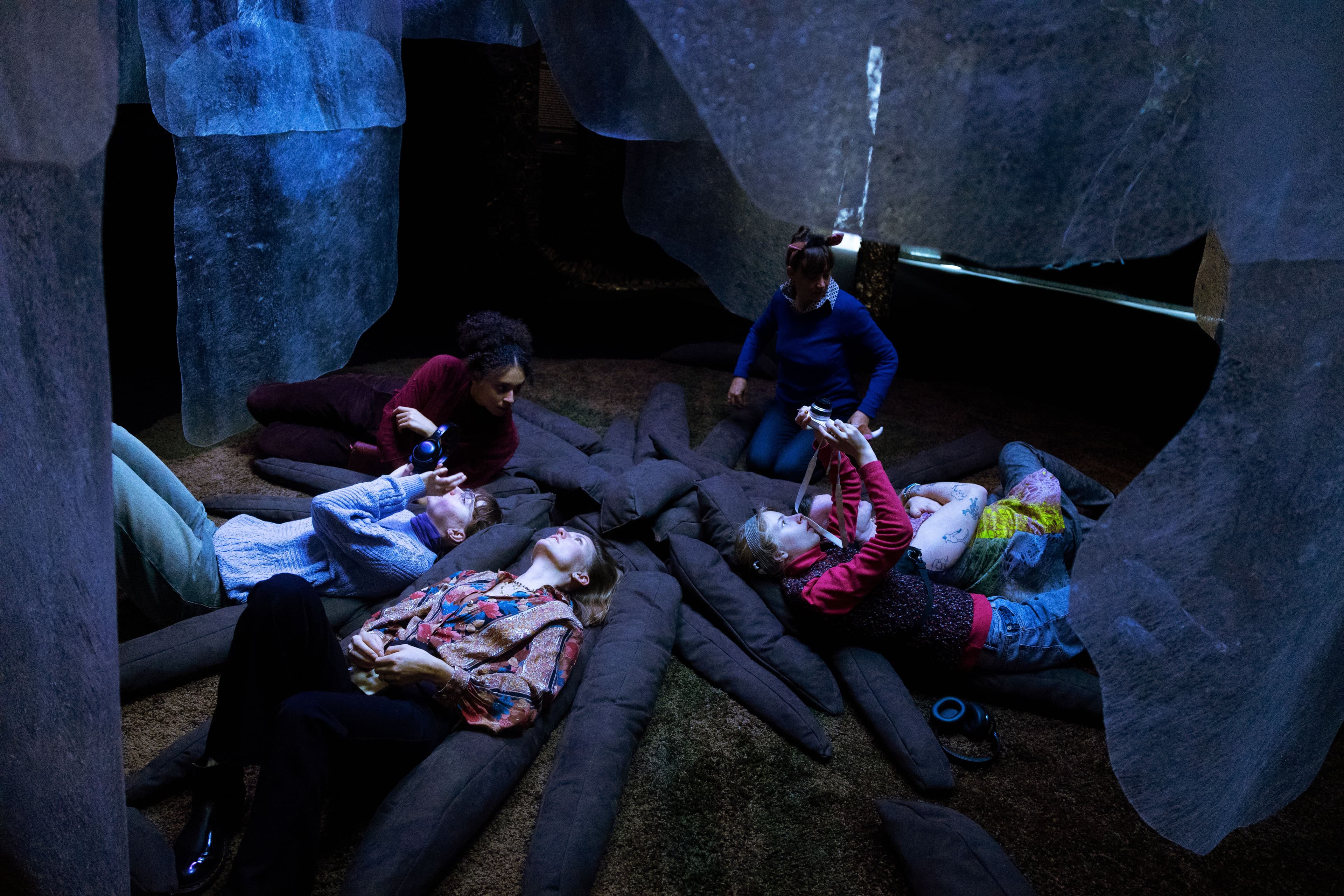
At least 1,000 species are expected to be identified during the BioBlitz in and around the Museumpark. In 2025, over 4,300 observations of around 1,200 species were made. For this edition of the BioBlitz, the Nieuwe Instituut Zoöp is emphasising that the New Garden and the surrounding greenery are also shaped by countless fungi and lichens. These fungi, or ‘anarchist designers’, are the focus of the exhibition of the same name, which is on display until 9 August in the institute’s largest exhibition space.
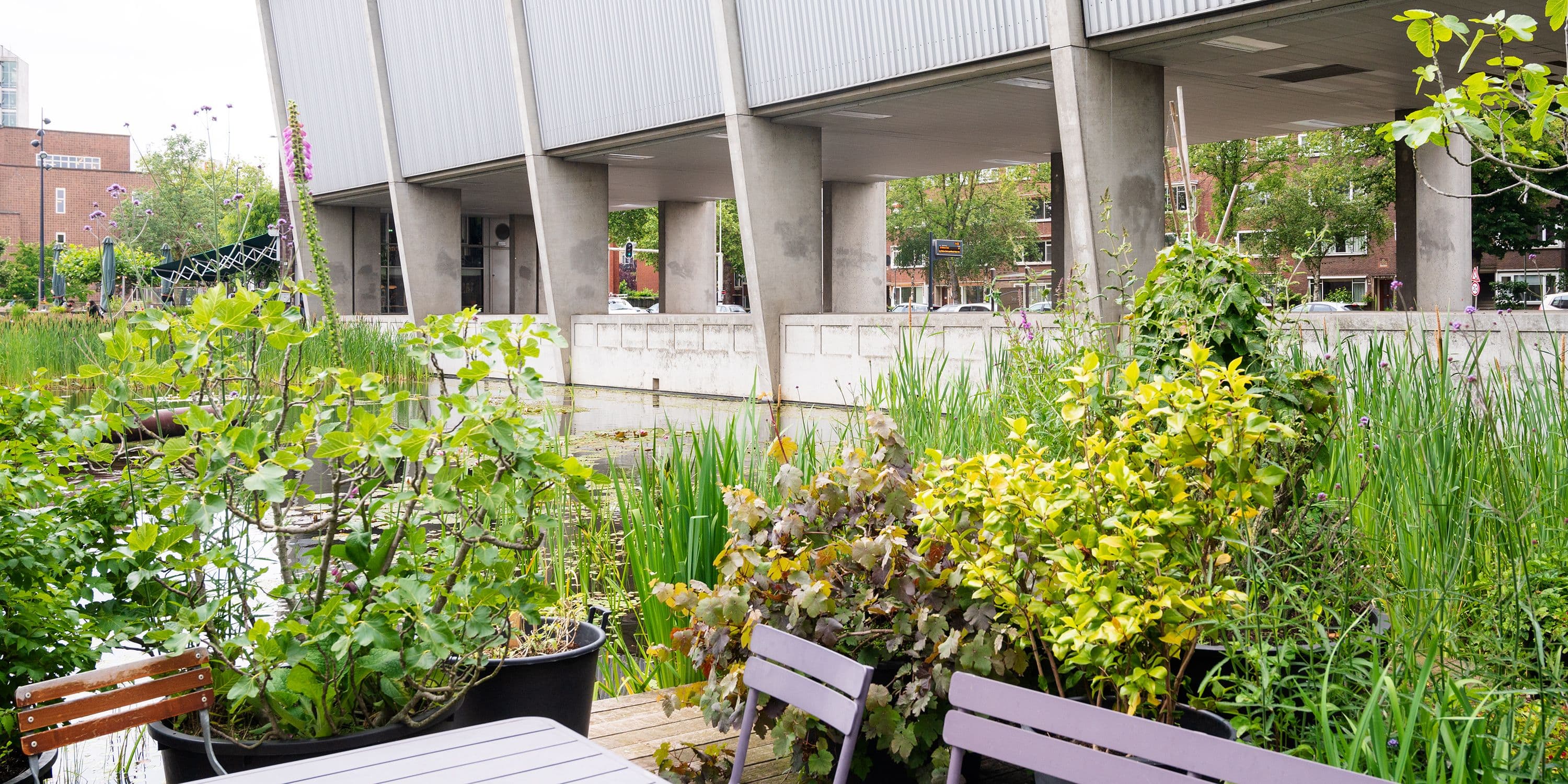
The exhibition features an installation centred on the tree trunks and stumps in the New Garden, which have been colonised by dozens of mushroom species over the past few years. Since autumn 2025, on behalf of Bureau Stadsnatuur, biologist Sandra van Iwaarden has been closely monitoring those fungi in the outdoor space surrounding the Nieuwe Instituut. Together with artist Frank Bruggeman, the co-designer and manager of the New Garden, she will lead a discussion on the upcoming Day for Biological Diversity. There will also be a fungi and lichens excursion to connect the exhibition content with our pursuit of a comprehensive overview of local biodiversity.
Detours
Since becoming a Zoöp, the Nieuwe Instituut has organised special Detours focusing on the ecological relationships within the more-than-human model of society and cooperation embraced by the institute. On 22 May 2026, Detour guide Naomi He-Ji will lead two such tours, which can be booked throughout the year. Just as she translates personal, societal and ecological issues into a colourful ‘little world’ of her own, informed by identity, visual arts and performance, all the Detour guides translate the institute’s content into distinctive experiences.
Scavenger hunts and quests
There is a special scavenger hunt for children called the Fungi-Finder, which is an extension of the FUNGI exhibition. This complements the ongoing Zoöp quest wonderfully, enabling even the youngest visitors to the Nieuwe Instituut to explore their relationship with non-human life. Both quests are continuously available free of charge at the institute’s reception desk.
The lecture at the end of the world
Anna Tsing, co-curator of the FUNGI exhibition and author of the international bestseller The Mushroom at the End of the World, gave a memorable talk at the opening. Dressed in a striated earthstar fungus costume designed by Romy Day Winkel, she discussed possible scenarios for coexistence and survival in this dark period of mass extinction and other ecological crises with her colleagues and friends, Donna Haraway and Rosi Braidotti. This philosophical dress-up session is certainly worth watching again.
On 28 May 2026, Tsing will return to the Netherlands for An Evening with Anna Tsing, organised in collaboration with the Rotterdam debate platform De Dépendance. She will delve deeper into the ‘Patchy Anthropocene’. In a geological era characterised by the consequences of human activity, specific areas of the globe exhibit unique socio-ecological changes. These fragmented landscapes each call for their own distinct, emphatically multidisciplinary approach. During the event, Tsing will discuss with journalist Nuria Ribas Costa what we can learn from this regarding the depletion of natural resources, as well as the ingenuity with which human and non-human actors develop new forms of society based on it.
Exit through the gift shop
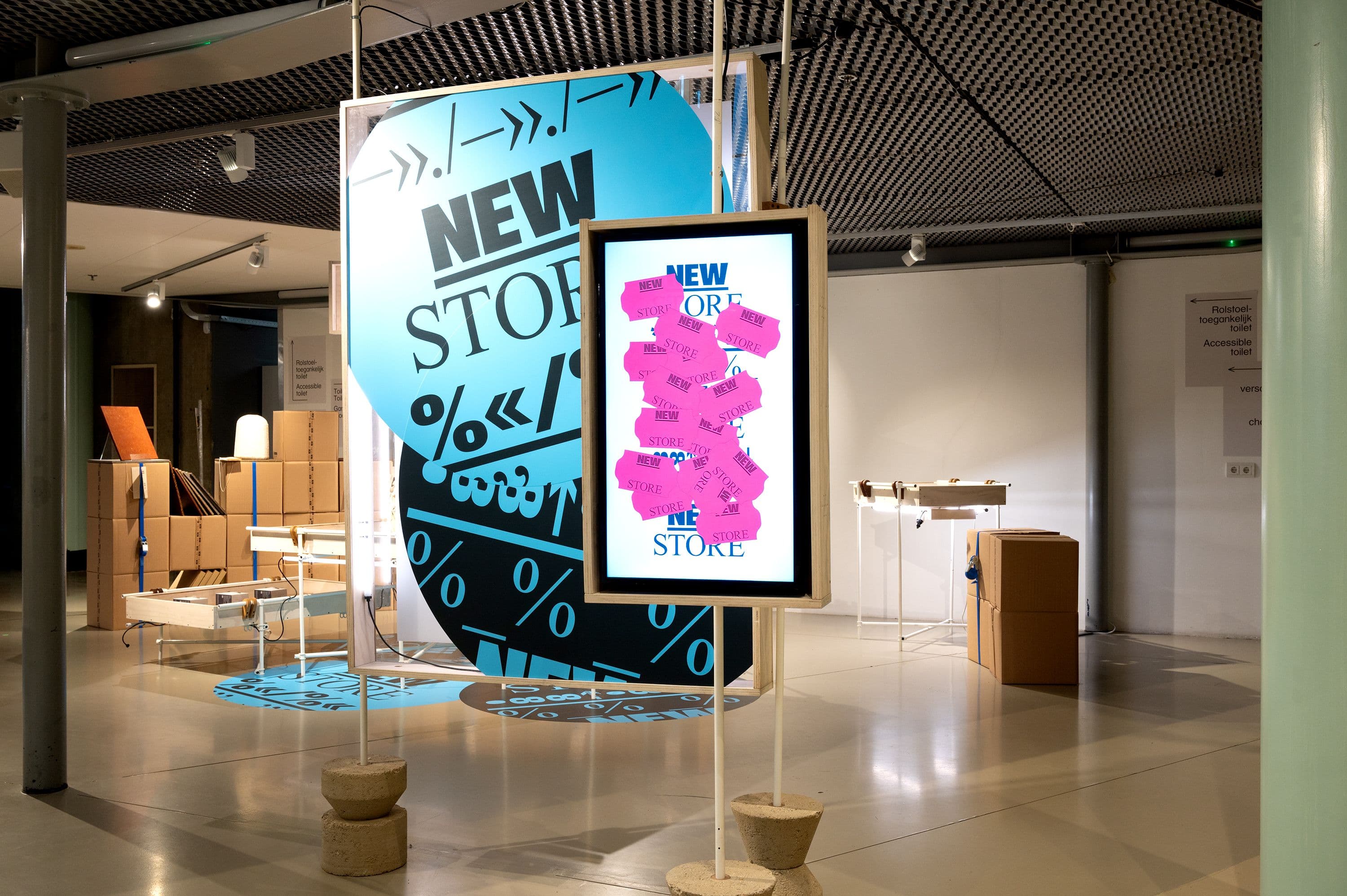
The efforts of the Nieuwe Instituut Zoöp cover the entire scope, from abstract and theoretical eco-discourse to consumer activism. To help promote Rotterdam’s biodiversity all year round, you can visit the New Store at the Nieuwe Instituut, where you can purchase items such as the flowering Duckweed Tile from the local initiative Flip the City. This museum shop explores how shopping, which usually symbolises harmful consumer behaviour, could contribute to restoration and fertility. Imagine a shop that doesn’t damage the living environment, but protects and nourishes it!