New Residents Selected for Redesigning Design Weeks 2026
Nieuwe Instituut, Milanese cultural organisation cheFare, and the Collective Works curators have announced the new resident designers for the 2026 edition of Redesigning Design Weeks – CIVICITY. Demo– practice and Ned Kaar were selected through an open call in autumn 2025, and will complete a two-month residency in Milan this year. During this time, they will develop site-specific design responses that critically examine the environmental, social and spatial challenges surrounding large-scale urban design events.
14 January 2026
Demo– practice and Ned Kaar will take part in CIVICITY, which is part of the multi-year Redesigning Design Weeks research and residency programme. The programme addresses the growing global significance of design weeks as key cultural and economic events by examining the sustainability and inclusivity of their current formats in their host cities. Redesigning Design Weeks explores how design can contribute to creating more sustainable, inclusive and future-oriented urban environments, focusing on Milan as a case study and collaboration site.
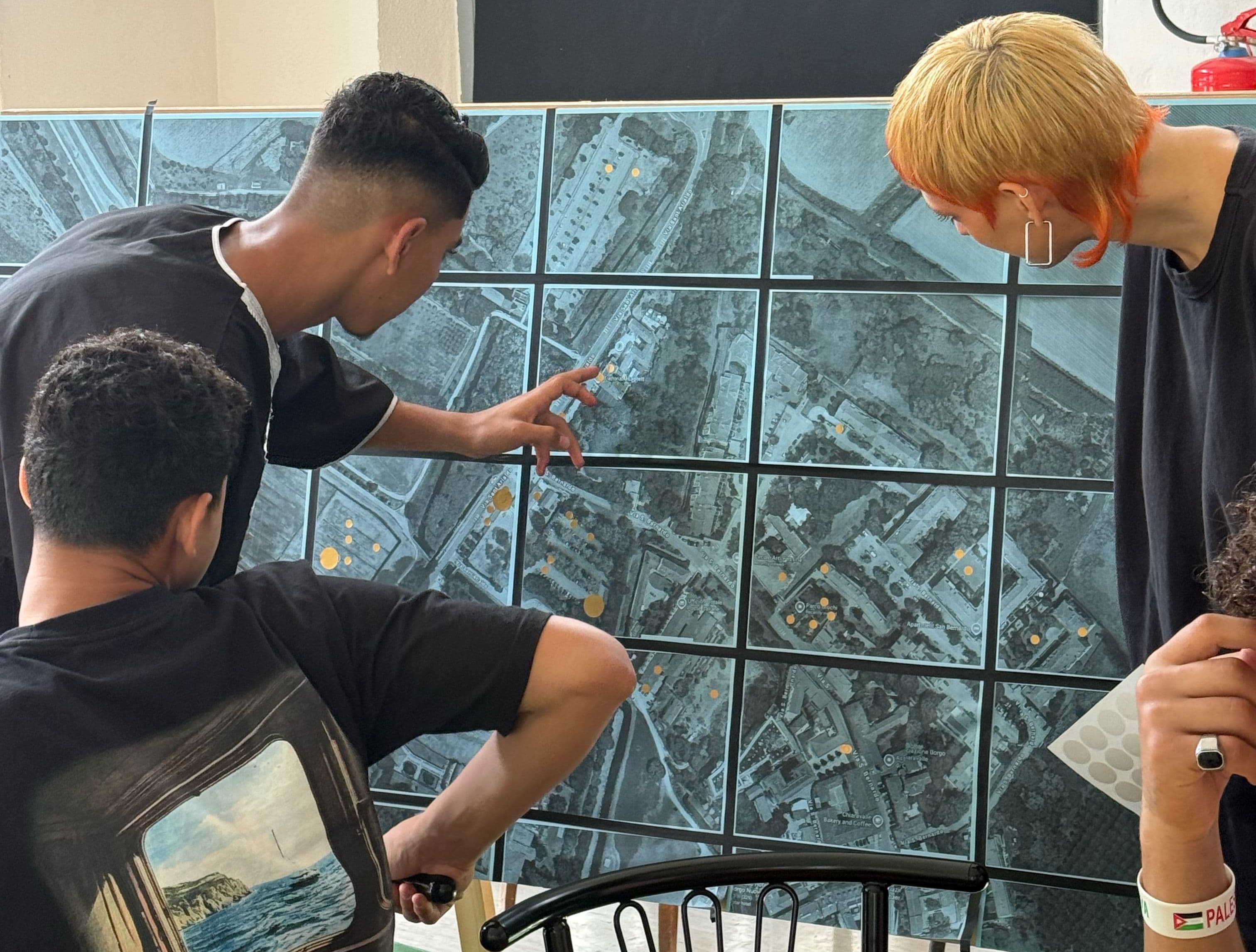
The selected designers applied for this residency through an open call in autumn 2025. They will spend two months in Milan, working with local communities to develop design solutions that critically examine the environmental, social and spatial challenges surrounding large-scale urban design events. Their research and proposals will be grounded in collaborations with local community organisations: Barrio’s in Milan’s Barona neighbourhood and Fondazione Abitiamo in the Niguarda district.
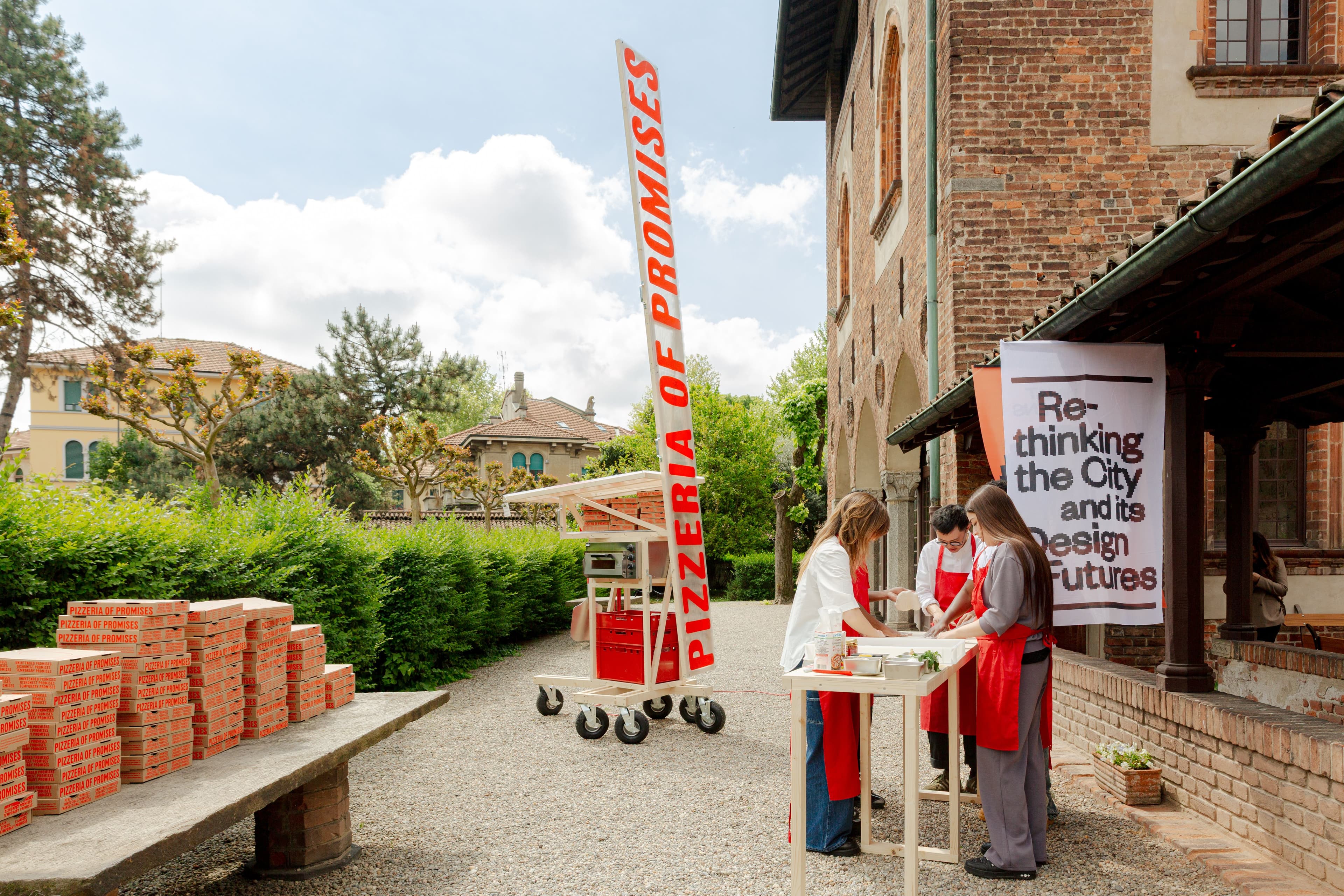
The designers will present their initial findings at Milan Design Week in 2026, alongside the final outcomes of the 2025 CIVICITY residents, Pete Fung and Studio-Method. Building on this previous research, Demo– practice and Ned Kaar will present the final, expanded outcomes of their residencies at Milan Design Week 2027.
Demo– practice
A social design collective based in the Netherlands, Demo– practice was founded by Alessandra Pandolfi and Phoebe Hotopf, who share an interest in civic life as a designed system.
Through collaborative and participatory forms of community engagement, they investigate how behaviours, technologies and governance structures shape collective rights and access to public spaces. Acting as mediators and facilitators, they co-create tools and spaces that enable communities to articulate, negotiate and transform their social environments. Treating invitation and interaction as intentional design acts, Demo– practice makes complex systems legible and reveals the often invisible processes shaping communal life, examining design as a shared, participatory process that supports and amplifies existing social realities while also opening space for new imaginaries to emerge.
Ned Kaar
An Irish designer based in the Netherlands, Ned Kaar has an interdisciplinary practice spanning objects, installations, exhibition-making and collective projects. His research focuses on questions of value in design, freelance labour conditions, and the role of craft and materials in global economic systems. He is particularly interested in gift economies as modes of reciprocity that challenge transactional models of design and cultural production.
He graduated from the MA Contextual Design course at the Design Academy Eindhoven, where he currently works as alumni coordinator and housing officer, and has contributed to the academy’s Milan Design Week presentations since 2022. In 2025, he initiated the exhibition Essential Interest to Dutch Culture on the Kruisstraat in Eindhoven for Dutch Design Week and published Gift as Surface with the Rotterdam-based collective Paskamer.
Comments from the selection committee
The open call attracted a large number of high-quality submissions. Notably, a significant number of applicants were Italians based in the Netherlands or educated in Dutch design institutions. Their motivations revealed a ‘double lens’: a deep-rooted connection to Milan, coupled with a critical, research-driven urgency. This perspective, sharpened by the Dutch design tradition, seeks to rethink Milan Design Week’s impact on the city’s social fabric. Overall, the response exceeded the jury’s expectations, making the selection process both challenging and engaging.
Ten applicants were invited for personal online interviews. These conversations provided valuable insight into their practices and their potential contribution to the CIVICITY project. The resulting shortlist was presented to the jury, consisting of Collective Works, cheFare, the Nieuwe Instituut, and one of the project’s ‘critical friends’, Stefano Maffei.
During the jury meeting, the committee looked beyond strong portfolios alone. We focused on finding a fresh angle compared to previous residencies and ensuring a meaningful balance between the designers’ approaches and their specific locations. After thorough discussion, two selected parties stood out as the clear voices to take this year’s residency forward. We are curious to see how their perspectives will challenge the status quo and shape the future of the project.
Locations
As part of the CIVICITY residency, the designers will work with two Milanese organisations that are rooted in their local contexts and active in addressing social and spatial inequality.
Barrio’s
Barrio’s is a social and cultural centre located in the Barona suburb of Milan. It was established in 1997 to prevent and combat educational poverty among young people while fostering social inclusion in disadvantaged communities. Across its two physical spaces, Piazza Donne Partigiane and EDI/Barrio’s Theatre, the centre offers after-school programmes, workshops, public art initiatives, counselling, psychological help and summer camps. As the Barrio’s team notes, “The real added value of Barrio’s lies in its ability to act as a hub within a solid local network. We don’t just inhabit the neighbourhood; we are part of its fabric.”
Fondazione Abitiamo
Fondazione Abitiamo is a non-profit organisation that operates in Milan’s Municipio 9 district to counter inequality and social exclusion. The initiative focuses on human relationships, neighbourhood care and the conscious use of shared spaces to transform ‘living’ into a civic act. Through interventions, community spaces and enhancing shared assets, the organisation fosters connections between people, neighbourhoods and the city. A key example of this is the redevelopment of the Via Cesari 6 area in Niguarda, where the space has been regenerated into a socio-cultural hub that strengthens the neighbourhood’s social fabric – embodying the essence of CIVICITY as a project of social transformation.
About the curators
Collective Works (Peter Zuiderwijk and Karin Mientjes), who curated the 2025 edition, will also curate the 2026 CIVICITY residency for designers based in the Netherlands. They will guide participants in working with Milanese communities, fostering connections between design practices and local needs, and highlighting opportunities for sustainable urban transformation. CIVICITY combines critical reflection and practical action, viewing design as a tool and a process for sparking dialogue, addressing structural inequalities and envisioning more inclusive urban ecosystems.
About Redesigning Design Weeks
Design weeks around the world have become key events where designers, companies and visitors can meet and exchange ideas, expertise and ambitions. However, with such events increasingly contributing to local pollution, rising living costs, housing crises, social inequality and over-tourism, the current design-week model is unsustainable. In partnership with the Embassy and Consulate-General of the Netherlands in Italy and the Milan-based organisation cheFare, the Nieuwe Instituut has launched the multi-year residency programme Redesigning Design Weeks. This programme invites Netherlands-based designers to critically examine the sustainability challenges of design weeks and to rethink existing practices.