25 Years of Sonneveld House Museum
Originally built for Albertus Sonneveld and his family, the white villa on the edge of the Museumpark began a new life as a museum house exactly a quarter century ago. After thorough restoration and refurbishment, this icon of the Nieuwe Bouwen movement welcomed its first visitors on 24 March 2001.
17 March 2026
From home to museum
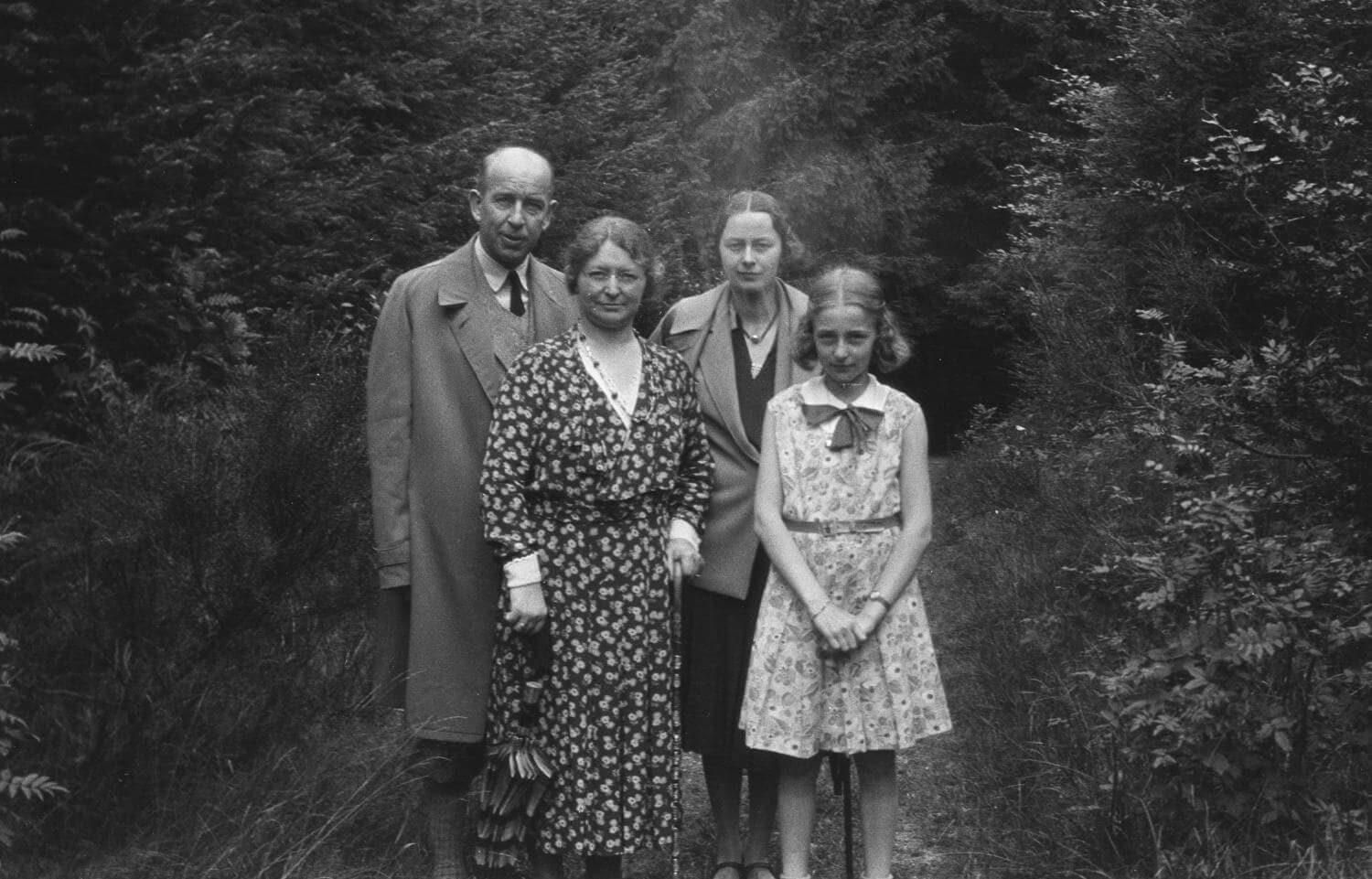
Sonneveld House was designed in the early 1930s for Albertus Sonneveld, director of the Van Nelle Factory, and his family: his wife Gésine, and their daughters Puck and Gé. They moved from their dark mansion on Heemraadsingel into an ultramodern villa that was light, spacious and colourful, keeping nothing from their old house except a few paintings. Architects Brinkman & Van der Vlugt designed not only the house itself, but also the interior down to the smallest detail.
Albertus and Gésine lived there until 1954. Their daughters had left home, and the couple moved to an apartment on Schiedamse Vest, a short distance away. Sonneveld House then became the property of the Belgian state, which used it as a consular residence and reception area until the advent of modern communication facilities made such accommodation obsolete in the 1990s. In 1997, the historical monuments foundation Volkskracht Historische Monumenten, purchased the house as ‘young heritage’. Following research by the architects Molenaar & Van Winden, who later did the restoration work, it was decided to designate the villa a museum house. It was not yet clear how or by whom the house would be used.
Restoration
The Netherlands Architecture Institute (NAi), the predecessor of the Nieuwe Instituut, was an obvious and enthusiastic and partner for the project. The house was just a stone’s throw away, and the NAi possessed the necessary expertise to supervise the restoration and manage the house. It was also important that the NAi collection contained the archive of architects Brinkman & Van der Vlugt. This archive provided almost complete information about the original state of the house. Furthermore, the Gispen archive provided a wealth of information about the furniture and lamps that had once been in the house.
This presented the NAI with a unique opportunity to supplement its collection by exhibiting architecture on a 1:1 scale, offering visitors a spatial experience. The museum house was primarily intended as a reconstruction of the Sonnevelds’ home, to show how they had lived there at the time. Therefore, the starting point for the restoration was the house’s state of completion in 1933.
Colour in the interior
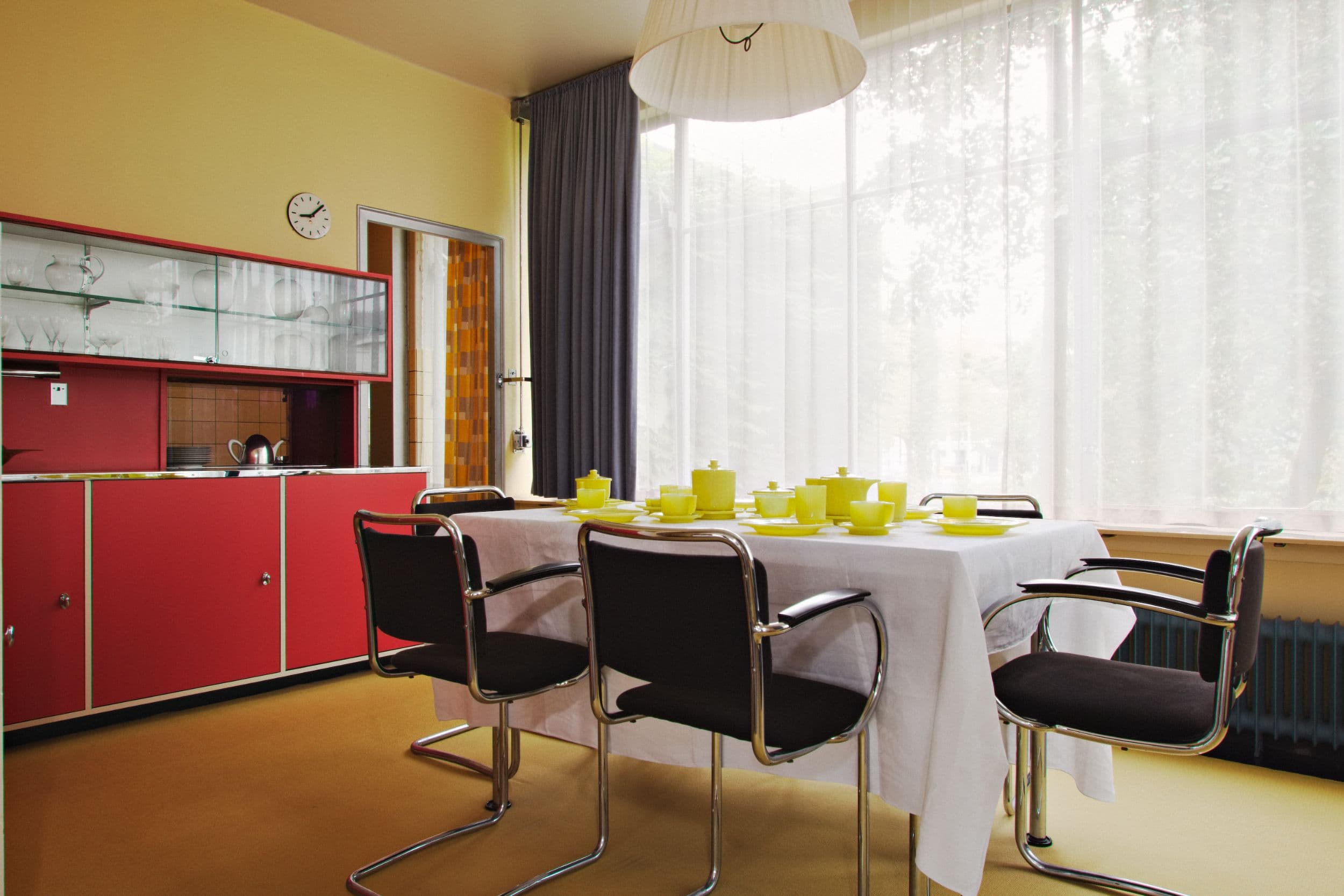
One of the most remarkable features of the house is its colour scheme. Although functionalist architecture is typically associated with white, grey and primary colours, the interior of Sonneveld House is surprisingly warm and earthy, featuring beige and brown tones alongside soft, muted shades of vermilion, cornflower blue and egg-yolk yellow. By the time the restoration began, none of this remained. The house had been painted pure white by its last occupants, and all the woodwork, including the spiral staircase, had been painted bright yellow.
The search then began for the original colours, gloss levels and surface textures. Old black-and-white photos, interior drawings and the memories of family members could provide only a general idea of the colour palette. A precise reconstruction required research inside the house itself. By scraping paint off the walls layer by layer, successive coats of paint were revealed. More than 200 of these ‘colour ladders’ were revealed. They showed the history of the interior’s entire colour structure.
Tip: In the house’s former garage, you can watch a documentary about the structural restoration and reconstruction of the interior.
Refurbishing
The house has been largely refurbished using objects from the Sonneveld estate, including furniture, lamps and the family’s personal belongings collected during their time there. These objects have been confirmed as having actually been in the house based on photographs and other historical materials, and the original interior has been reconstructed as accurately as possible using them.
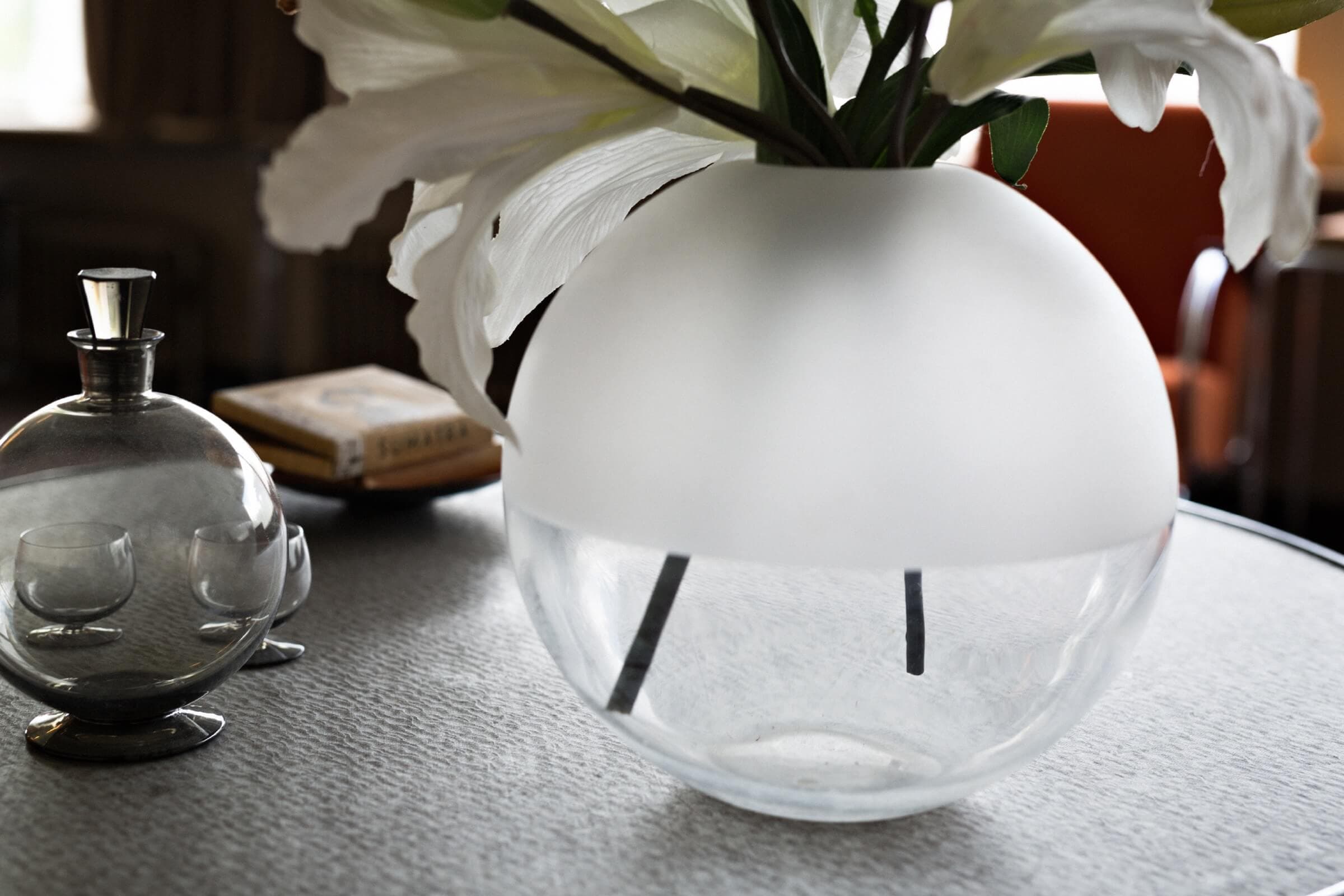
Design pieces from the 1930s, primarily glassware, have also been added to further enliven the interior. These items reflect the family’s tastes, the style of the house and the period.
A living house
Sonneveld House now welcomes around 20,000 visitors a year. For 25 years, the house and its colourful interior have also been a source of inspiration for artists. Fashion photographer Vivianne Sassen, Norwegian artist Anja Niemi, and architectural photographer Kim Zwarts are just a few of the artists who have produced work in the house. Michelle Bauer and Martijn Kappers have photographed dancers from the company Connie Jansen Danst in the house, and the living room has served as the backdrop for the mini-opera La Voix Humaine.
Over the years, the Nieuwe Instituut has also commissioned artists to create site-specific works for the house. These artists include interior architect Petra Blaisse, designer Richard Hutten, and jewellery designer Gijs Bakker who collaborated with the poet K. Schippers.